

Email marketing stops being effective when it’s treated as a sequence of sends.
It starts compounding when it’s designed as a system.
1. What changes from 101 to 102 (context for the reader)
101 taught you how email works.
102 teaches you how email thinks.
This section clarifies:
Why sending more emails doesn’t equal better results
Why “automation” alone isn’t sophistication
Why most SMBs plateau after the basics
Core idea:
Email 102 is not about doing more.
It’s about designing fewer actions that trigger smarter outcomes.
2. Email as infrastructure, not a channel
Reframing email’s role
Email is:
not a broadcast tool
not a newsletter engine
not a promotional megaphone
Email is infrastructure:
it connects acquisition, content, sales, and retention
it stores relationship context
it compounds over time
This section introduces the concept of email as a system layer inside the business.
3. Lifecycle thinking: before, during, after the sale
Instead of “campaigns”, Email 102 operates on lifecycle stages:
a) Before the sale
Education
Trust-building
Expectation-setting
b) During the decision
Relevance
Timing
Confidence
c) After the conversion
Onboarding
Reinforcement
Retention
Expansion
Key insight:
Most SMBs obsess over pre-sale emails and abandon the lifecycle after conversion — where the highest leverage actually is.
4. Behavior > demographics (the real segmentation leap)
Email 102 moves away from:
age
job title
location
And prioritizes:
actions taken
intent signals
engagement patterns
Examples:
Clicked but didn’t convert
Visited pricing more than once
Opened onboarding emails
Ignored last 3 campaigns
Segmentation becomes dynamic, not static.
5. Designing automations that feel intentional (not robotic)
This section reframes automation:
Automation is not:
“set it and forget it”
long drip sequences
endless nurture emails
Automation is:
conditional logic
decision trees
relevance at scale
Introduce:
trigger-based flows
stop conditions
negative signals (when not to email)
6. Cadence, timing, and restraint
Email 102 introduces a concept many platforms ignore:
strategic silence.
Topics:
When not sending performs better
Frequency as a function of value, not schedule
Using engagement decay as a signal
Avoiding inbox fatigue
Principle:
The best emails are often the ones you didn’t send.
7. Email as part of a larger system (content, site, sales)
Email doesn’t live alone.
This section connects:
blog → email → product
email → website behavior → follow-up
email → sales handoff (when applicable)
Email becomes the connector, not the destination.
8. Measurement that actually informs decisions
Email 102 abandons vanity metrics.
It focuses on:
trend direction, not isolated numbers
relative performance between segments
lifecycle movement (not just opens)
Reframe metrics as signals, not scores.
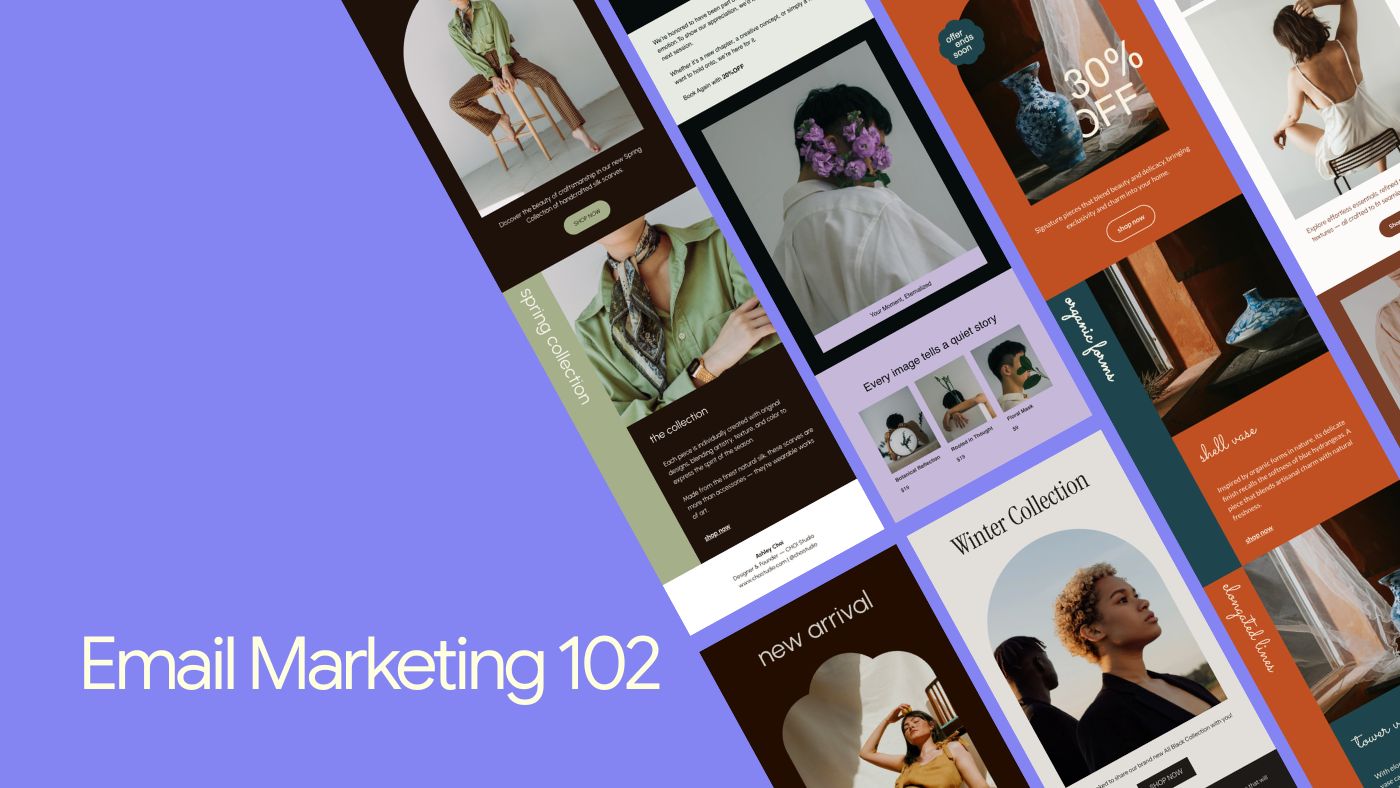
9. Designing emails that support the system
Design at 102 is about:
clarity over decoration
hierarchy over aesthetics
consistency over novelty
Key ideas:
emails are read, not admired
structure beats style
visual restraint builds trust
This is where Brandset’s design system naturally fits — without selling.
10. The compounding effect of doing less, better
Closing section.
Bring the reader back to the core thesis:
Email 102 is not about:
hacks
tricks
volume
It’s about:
intentional systems
long-term trust
relevance at scale
Final takeaway:
When email stops trying to sell and starts trying to understand, revenue becomes a side effect.